The Early Church Councils: How Orthodoxy Was Defined
The faith once delivered to the saints was defended at great cost — and it still matters today

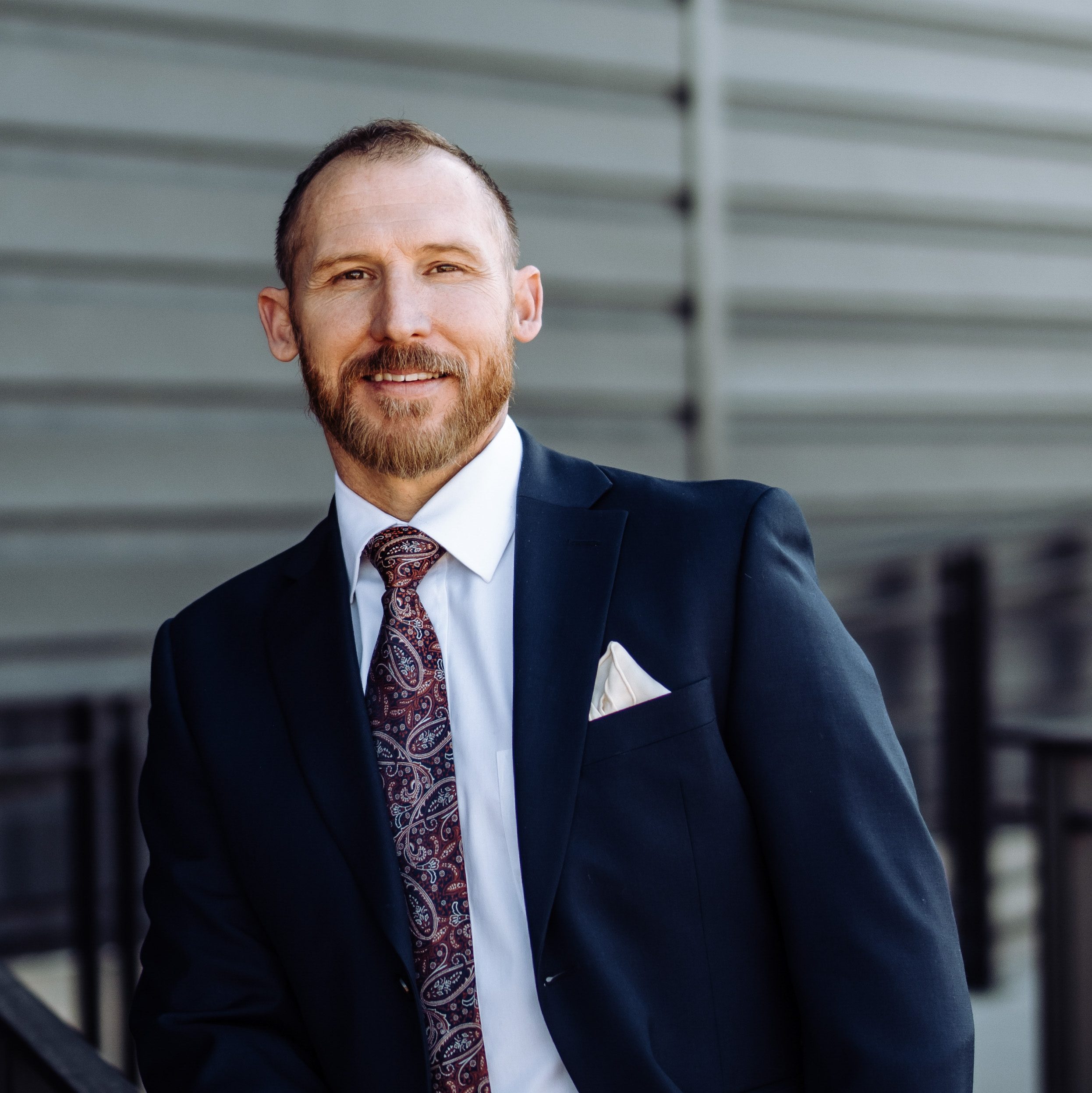 By Dr. Peter J. Carter
One of the most common misconceptions about Christian doctrine is that it was invented by later theologians and imposed upon Scripture. The reality is quite different. The great doctrines of the faith — the Trinity, the full deity of Christ, the two natures of Christ in one Person — were not fabricated in council chambers. They were drawn from Scripture in response to serious errors that threatened to destroy the gospel from within. The early ecumenical councils did not create orthodoxy. They recognized it, articulated it, and defended it against teachings that would have gutted the Christian faith of its saving content.
Understanding these councils is not an exercise in antiquarian curiosity. It is essential for every believer who wants to understand why we believe what we believe, how we got the creeds we confess, and why the theological categories that were forged in the fires of ancient controversy remain indispensable today. The four councils we will examine — Nicaea (AD 325), Constantinople (AD 381), Ephesus (AD 431), and Chalcedon (AD 451) — represent the church's most sustained and consequential effort to articulate the biblical faith in the face of sophisticated error.
The crisis that led to the Council of Nicaea began with a presbyter in Alexandria named Arius. His teaching was elegant, logical, and devastatingly wrong. Arius argued that the Son of God was the first and greatest of all created beings — exalted above all creation, to be sure, but nonetheless a creature. "There was a time when He was not," Arius famously declared. In his view, the Son was not truly God in the same sense that the Father is God. He was a subordinate, derivative being — divine in some qualified sense, but not possessing the same eternal, uncreated nature as the Father.
This was not a minor theological disagreement. If Arius was right, then the One who died on the cross was not truly God, and if He was not truly God, then the atonement collapses. A creature, no matter how exalted, cannot bear the infinite weight of divine wrath on behalf of a fallen race. A creature cannot bridge the infinite gap between God and sinful humanity. The gospel itself was at stake, and the bishop of Alexandria, Alexander, along with his brilliant young deacon Athanasius, recognized this immediately.
Emperor Constantine, recently converted and eager for unity in his newly Christianized empire, convened a council at Nicaea in AD 325. Approximately 318 bishops gathered — many of them bearing the scars of the recent persecution under Diocletian. These were not armchair theologians. They were men who had suffered for the faith they were now called to define.
The council's response to Arianism was the Nicene Creed, which declared that the Son is "of one substance" (homoousios) with the Father — not merely similar to the Father, not merely like the Father, but of the very same divine essence. The Son is "God of God, Light of Light, very God of very God, begotten, not made." This was a direct and unambiguous repudiation of Arius. The Son is not a creature. He is eternally God, sharing fully in the divine nature.
Athanasius, who would become bishop of Alexandria shortly after the council, spent the next several decades defending the Nicene faith against relentless opposition. He was exiled five times for his refusal to compromise. His famous treatise On the Incarnation remains one of the greatest works of Christian theology ever written. The phrase Athanasius contra mundum — "Athanasius against the world" — captures the spirit of his stand. He was willing to be the last man standing if that was what faithfulness required.
The Arian controversy did not end at Nicaea. In the decades that followed, various semi-Arian positions emerged, each attempting to find a middle ground between full orthodoxy and outright Arianism. Some accepted the deity of the Son but denied the full deity of the Holy Spirit. These were known as the Pneumatomachians, or "fighters against the Spirit." They argued that the Spirit was a created being, a ministering servant of God but not Himself God in the fullest sense.
The Council of Constantinople, convened by Emperor Theodosius I in AD 381, addressed this error directly. Building upon the work of the Cappadocian Fathers — Basil of Caesarea, Gregory of Nazianzus, and Gregory of Nyssa — the council expanded the Nicene Creed to include a robust affirmation of the Holy Spirit's deity. The Spirit is described as "the Lord, the Giver of Life, who proceeds from the Father, who with the Father and the Son together is worshiped and glorified, who spoke by the prophets."
The Cappadocian contribution to Trinitarian theology cannot be overstated. It was Basil who developed the crucial distinction between ousia (essence or substance) and hypostasis (person), allowing the church to confess one God in three Persons without falling into either modalism (the idea that Father, Son, and Spirit are merely three modes of one Person) or tritheism (the idea that there are three separate Gods). Gregory of Nazianzus, known as "the Theologian," delivered his famous five Theological Orations in Constantinople, providing some of the most precise and eloquent articulations of Trinitarian doctrine in the history of the church.
The result of Constantinople was a fully developed doctrine of the Trinity: one God, three co-equal, co-eternal Persons — Father, Son, and Holy Spirit — sharing one divine essence. This is the faith that every orthodox Christian church confesses to this day, whether Eastern Orthodox, Roman Catholic, or Protestant. The Niceno-Constantinopolitan Creed, as it is properly called, remains the most widely accepted statement of Christian belief in the world.
With the doctrine of the Trinity essentially settled, the church's attention turned to a closely related question: How are the divine and human natures related in the Person of Jesus Christ? This question was not academic. It went to the heart of the incarnation and, therefore, to the heart of salvation.
The controversy centered on Nestorius, the patriarch of Constantinople, and his rejection of the title Theotokos ("God-bearer" or "Mother of God") for the Virgin Mary. Nestorius preferred the term Christotokos ("Christ-bearer"), arguing that Mary gave birth to the human nature of Christ, not to His divine nature. On the surface, this seemed reasonable. But Cyril of Alexandria, the most formidable theologian of the era, recognized that Nestorius's position implied a dangerous division within the Person of Christ. If Mary bore only the human nature, then the two natures in Christ were so radically separated that one could speak of two subjects — the divine Son and the human Jesus — rather than one unified Person.
The problem with this separation is that it undermines the very logic of redemption. If the divine nature and the human nature are not truly united in one Person, then it is not God who suffered on the cross — it is merely a human being loosely associated with God. And if God did not truly enter into human suffering and death, then the atonement loses its power and its meaning. The salvation of the human race requires that the One who dies for humanity is both truly God and truly man in one undivided Person.
The Council of Ephesus, convened by Emperor Theodosius II in AD 431, sided with Cyril and affirmed the title Theotokos. The council insisted on the real, personal unity of the two natures in Christ. Mary did not give birth to a nature. She gave birth to a Person — and that Person is the eternal Son of God, who took upon Himself a complete human nature in her womb. The divine and human natures are united in the one Person of Christ, and whatever is predicated of either nature can be predicated of the whole Person. This principle, known as the communicatio idiomatum (the communication of attributes), became foundational for all subsequent Christological reflection.
If Nestorius had erred by dividing Christ's two natures too sharply, a monk named Eutyches erred in the opposite direction by confusing them. Eutyches taught that after the incarnation, the two natures of Christ were merged into a single nature — a blend of divine and human that was, in effect, neither fully divine nor fully human. This position came to be known as Monophysitism (from the Greek monos, "one," and physis, "nature"). The result was a Christ who was a hybrid — a tertium quid, a third thing that was neither God nor man in the full sense of either term.
The danger of Eutychianism was as grave as that of Nestorianism, though it came from the opposite direction. If the two natures are merged or confused, then Christ is not truly human, and if He is not truly human, He cannot truly represent the human race in His death and resurrection. The writer of Hebrews was emphatic on this point: "He had to be made like his brothers in every respect, so that he might become a merciful and faithful high priest in the service of God, to make propitiation for the sins of the people" (Hebrews 2:17, ESV). A Christ who is not fully human cannot save humans.
The Council of Chalcedon, convened by Emperor Marcian in AD 451, produced what is arguably the most important Christological statement in the history of the church. The Chalcedonian Definition affirmed that Jesus Christ is one Person in two natures — divine and human — and that these two natures exist "without confusion, without change, without division, without separation." These four negations, known as the Chalcedonian boundaries, set the parameters within which all faithful Christology must operate.
"Without confusion" and "without change" guarded against Eutychianism. The two natures are not blended or altered by their union. The divine nature remains fully divine, and the human nature remains fully human. "Without division" and "without separation" guarded against Nestorianism. The two natures are not divided into two persons or separated into two subjects. They are united in the one Person of the eternal Son.
The influence of Pope Leo I of Rome was decisive at Chalcedon. His famous letter to Flavian, known as the Tome of Leo, provided a clear and balanced articulation of the two-nature Christology that the council adopted. When Leo's letter was read aloud to the assembled bishops, the response was immediate and enthusiastic: "Peter has spoken through Leo!" The Latin West and the Greek East, for this moment at least, spoke with one voice.
It is tempting for modern Christians, particularly in Protestant traditions, to view these ancient councils as relics of a distant and unfamiliar world. We may feel that our faith is grounded in Scripture alone, and that we have no need for the pronouncements of bishops who lived more than fifteen centuries ago. But this attitude, however well-intentioned, is deeply misguided. Here is why.
First, the councils defended truths that are essential to the gospel. The deity of Christ, the Trinity, the unity of Christ's Person, the reality of His two natures — these are not peripheral doctrines. They are the load-bearing walls of the Christian faith. Remove any one of them, and the entire structure collapses. If Christ is not truly God, He cannot save. If He is not truly man, He cannot represent us. If the Spirit is not God, our sanctification is a fiction. The councils did not invent these truths. They protected them from errors that would have destroyed them.
Second, the heresies the councils addressed are alive and well today. Arianism did not die in the fourth century. It reappears every time a teacher suggests that Jesus was a great moral example or an exalted creature but not truly God in the fullest sense. Modalism resurfaces every time someone conflates the Father, Son, and Spirit into a single undifferentiated Person. Nestorianism and Eutychianism are echoed every time a preacher speaks of Christ's humanity and divinity in ways that either divide or confuse them. The ancient errors are not ancient. They are perennial. And the church's defense against them must be perennial as well.
Third, the councils teach us how to do theology faithfully. The bishops at Nicaea, Constantinople, Ephesus, and Chalcedon did not invent new doctrines. They read Scripture carefully, engaged with the theological tradition that preceded them, and articulated the faith in language that was precise enough to exclude error and broad enough to preserve the mystery of what God has revealed. This is the model for all faithful theology: not innovation for its own sake, but careful, reverent articulation of what God has spoken in His Word.
Fourth, the councils remind us that doctrine has a cost. Athanasius was exiled five times. Many bishops at Nicaea bore the physical scars of persecution. The theological controversies of the fourth and fifth centuries were not polite academic discussions. They were battles for the soul of the church, and the men who fought them paid a price. We who inherit the fruits of their labor should not take it lightly. The creeds we recite on Sunday morning were purchased with suffering, courage, and an unyielding commitment to the truth.
When we confess the Nicene Creed, we are not merely repeating ancient words. We are joining our voices with Athanasius and the Cappadocians, with Cyril and Leo, with the scarred bishops of Nicaea and the assembled fathers of Chalcedon. We are declaring that the faith they defended is our faith, that the Christ they confessed is our Christ, and that the gospel they protected with their lives is the same gospel we are called to proclaim to our generation.
The councils matter because the truth matters. And the truth matters because Christ matters. He is God of God, Light of Light, very God of very God — and He is ours.
Rooted. Reasoned. Relevant.